

Home and community-based services (HCBS) are Medicaid programs that help people with disabilities and older adults get care at home, not in a nursing facility. Family caregivers usually provide care, but you may need to reduce your work hours or quit your job. However, if you are a family caregiver, you might be able to get paid for caring for your loved one.
The Centers for Medicare and Medicaid Services provides home and community-based services to keep your loved one at home, not in a nursing facility. Besides delivering meals and non-medical transportation, almost all states cover these important services:
Each state has different types of assistance. Services depend on the Medicaid waiver program your loved one qualifies for. Specific states may have extra services like nutritional counseling or specialized childcare for California HIV/AIDS patients. Most states will also help your loved one continue working by providing career services or workplace accommodations. But the main goal of HCBS is to pay family caregivers so your loved one doesn’t have to live in a nursing home or assisted living facility.
The Centers for Medicare and Medicaid Services (CMS) created the HCBS Final Rule in 2014. It sets the rules states must follow when they use Medicaid-funded waivers to pay for care at home.
The HCBS Final Rule focuses on independence, community, and person-centered care for people with disabilities and aging adults. The service plan is based on your loved one’s personal needs and goals. The Final Rule also promotes job options. While states are responsible for delivering services, some providers have till 2028 to comply with the Final Rule. Check the individual plan in your state.
Thanks to the HCBS settings rule, your loved one stays connected to their community. They can live at home and get what they need to thrive with dignity. Their privacy is protected. Your loved one chooses what they need, like meal delivery, personal care, or a ride. And they avoid moving to a nursing home or assisted living facility.
Before Medicaid home and community-based services, too many people with disabilities and aging adults ended up in nursing homes. They were isolated and lost their freedom. Families had limited options. Institutional care was usually the only choice. Now there are more options that keep your loved one in their community because of the HCBS settings rule:
While Medicaid covers these services, each state manages them. State HCBS programs are different in each state.
Families work with care teams to develop person-centered plans based on what your loved one wants and needs. Your family member chooses where to live, their community, and how to spend their time.
You know that your loved one lives in a place with:
The public has a right to share input on how states honor the rule and care for disabled and aging adults. You also have a right to know any changes to the HCBS settings rule. This includes public updates to the home and community based services waiver programs and service plans.
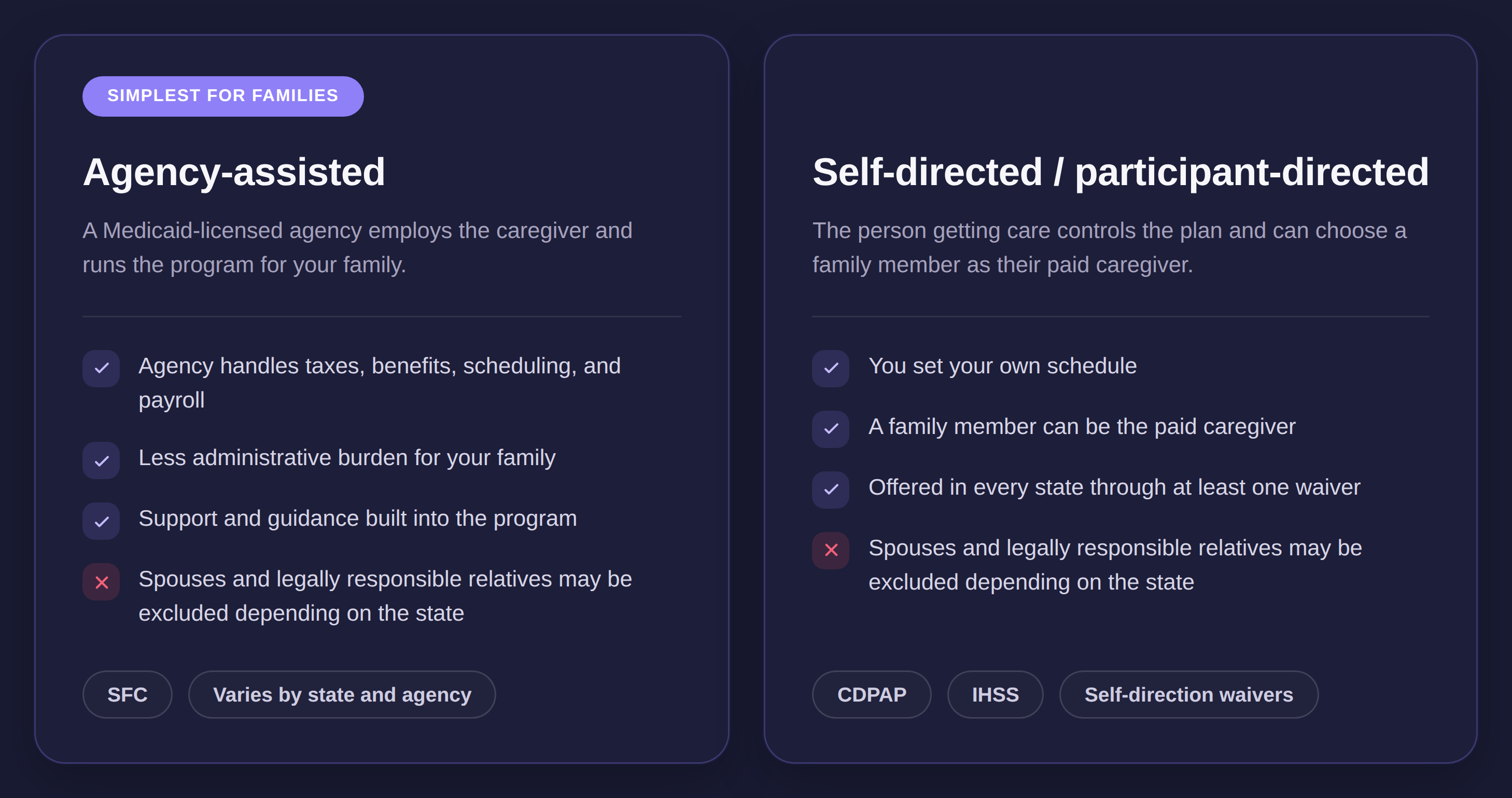
Family caregivers can get paid through HCBS by enrolling in a self-directed Medicaid program. In a self-directed program, the care recipient chooses a personal care plan and who provides care, including family members and friends.
Givers is a Medicaid-licensed agency. We handle the paperwork like enrollment, scheduling, payroll, and compliance, so you can focus on caring for your loved one. Whether you can get paid depends on your state and the specific Medicaid waiver your family member qualifies for.
Medicaid eligibility in Georgia
Medicaid eligibility in Connecticut
Medicaid eligibility in Michigan

Your family member chooses who will provide care through the self-directed Medicaid HCBS waiver. The Medicaid program pays the family caregiver the state’s family caregiver pay rate.
All states and the District of Columbia offer at least one Medicaid program that pays family caregivers. Each state’s programs, eligibility, and caregiver pay rates are different. Some state programs may have a waiting list or limit enrollment.
Some state programs will pay a spouse for family caregiving. Not all states and programs allow spouses to be paid. Structured family caregiving offers the best option for spouse eligibility.
Yes. State Medicaid agencies pay family caregivers under CMS oversight. Givers is a Medicaid-licensed Structured Family Caregiving agency that helps families navigate enrollment into these programs.


