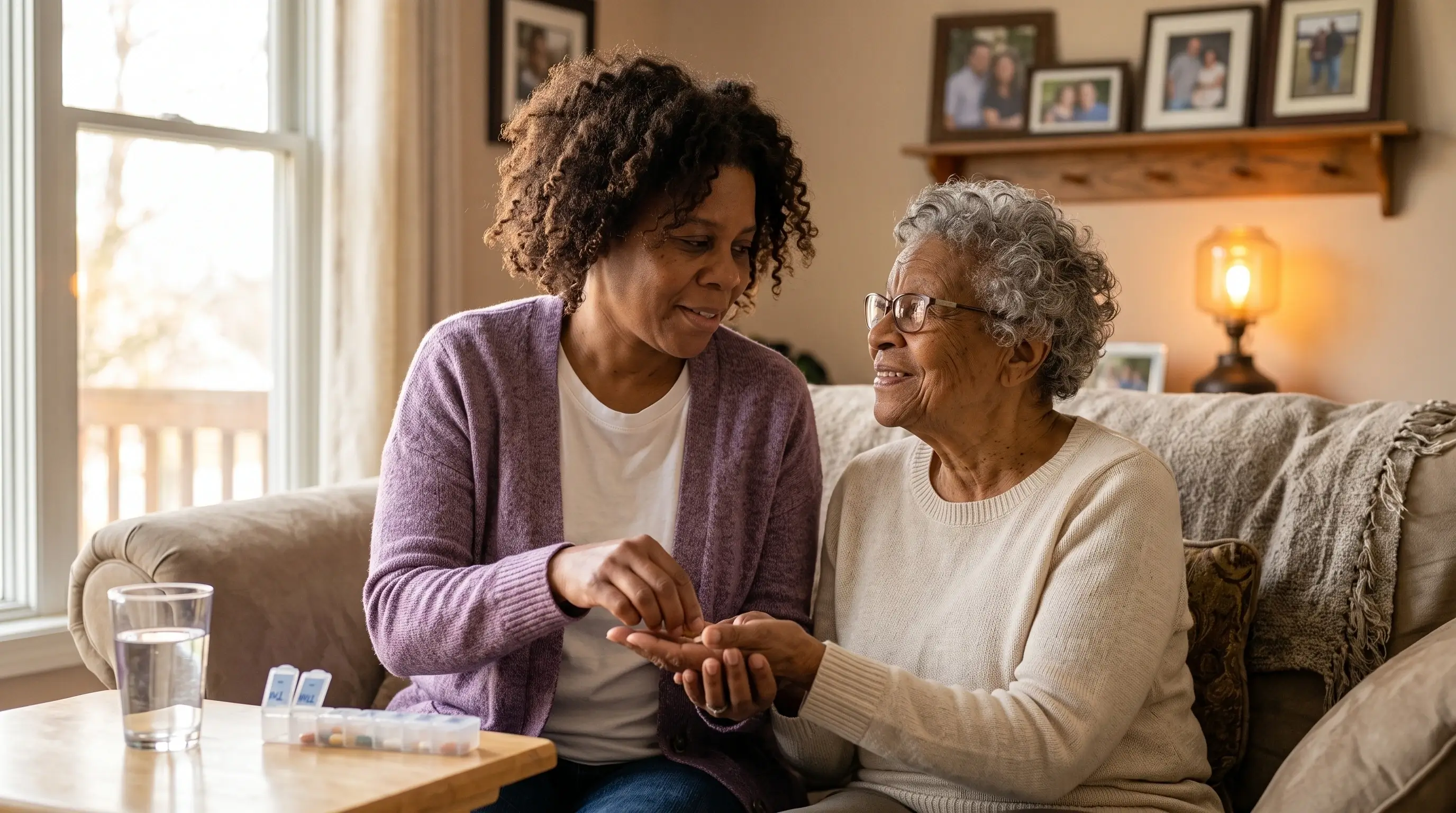

Michigan doesn’t have CDPAP. Many family caregivers have heard of New York’s CDPAP program from friends or websites. CDPAP is a New York State Medicaid Program. It lets Medicaid members choose their own caregiver, including friends and family. In Michigan, you may get paid through the Home Help Program or MI Choice Waiver program, soon to include Structured Family Caregiving.
This family caregiver guide will tell you what Michigan calls its Medicaid waiver programs, how they work, what they pay, and who qualifies. For step-by-step help with enrollment, visit our Michigan caregiver guide to getting paid.
No. CDPAP is New York’s Consumer Directed Personal Assistance Program. Michigan has similar self-directed programs under a different name than CDPAP. You may have heard about CDPAP in Michigan from a relative or online. While CDPAP isn’t available in Michigan, the state has similar CDPAP Michigan programs like Home Help and the MO Choice Waiver. Structured Family Caregiving is also expected to launch in 2026.
Get paid to take care of a family member in Michigan with one of two programs, with a third one expected in 2026. Qualifying depends on the level of care, who the caregiver is, and whether you live with your loved one. Each program provides support and financial assistance for Michigan caregivers.
Instead of CDPAP, Michigan has the Home Help Program, which can pay $17.13/hour to family caregivers in 2026. Like the New York CDPAP, the upcoming Structured Family Caregiving (SFC) and MI Choice Waiver Programs also pay caregivers. While the Home Help Program doesn’t pay spouses, the MI Choice Waiver can in some cases. So, which program is right for you?
Michigan Home Help is the closest to CDPAP services in Michigan. MDHHS personal care services have no waitlist. Your loved one picks their own caregiver. Adult children, siblings, grandchildren, friends and neighbors can be paid for caregiving. Home Help will not pay spouses or legal guardians of minors under care.
The goal of the Home Help program is to increase the quality of life for aging adults by letting them thrive at home with the people they want to be with.
If your loved one meets the Nursing Facility Level of Care (NFLOC) and income requirements, you may get paid under the self-directed option. With consumer-directed care, your relative chooses their caregivers, including spouses in some cases.
This waiver program lets aging adults and people with disabilities stay in their communities instead of a nursing facility. The waiver program reduces isolation and improves outcomes for your loved one. The MI Choice Waiver program is limited and has a waitlist. About twenty Waiver Agencies manage care plans throughout the state, usually through Area Agencies of Aging (AAAs).
New in 2026, Structured Family Caregiving will pay a tax-free daily stipend to live-in caregivers. There are different spouse SFC rules than with the MI Choice Waiver. Spouses don’t receive pay under SFC. Caregivers must live with the Medicaid participant to get paid.
The SFC’s goals are to reduce caregiver isolation and burnout. Through SFC, caregivers receive training, an individualized care plan, coaching, and financial support to care for their loved one. Givers supports this pathway and can help answer questions you may have.
With this self-directed program, your loved one picks who provides personal care instead of taking the agency choice. They have the freedom to choose the people they trust to provide care instead of relying on a stranger.
Michigan CDPAP works through Medicaid. Not everyone qualifies for these programs. Your loved one must qualify for Medicaid and enroll before applying to a program. The state decides if they meet requirements for self-directed care by looking at their needs, housing and finances. Family caregivers may get paid if their loved one is approved. The state also decides how many hours of care it will pay for. This is called a functional assessment.
Enroll in Michigan’s CHAMPS portal, an Electronic Visit Verification (EVV) system that manages timesheets, health information and care plans. The CHAMPS portal helps caregivers keep track of their pay. It promotes transparency and protects aging adults from neglect by verifying caregiver identity and checking that caregiving services are being provided.
Home Help pays a taxable $17.13/hr in 2026. MI Choice Self-Determination Option (SDO) pays between $13-$17/hr, taxes may be excluded in some cases for difficulty of care payments. Caregivers are paid for providing personal care like meal prep, managing medications, or help with bathing.
Each program pays differently depending on need, program rules, and income levels. The caregiver pay rate can change yearly. The Michigan Department of Health and Human Services provides up-to-date information on the most recent pay rates.
The Structured Family Caregiving program, coming soon in 2026, will pay a tax-free daily stipend depending on the participant’s medical needs, income, and living situation. Caregivers must live in the same home to receive pay for caregiving.
While each program has different rules, in general, your loved one needs to be a Michigan resident on Medicaid who needs help with at least one activity of daily living, like getting dressed or eating.
The 2026 Structured Family Care Program is expected to have stricter requirements. Your loved one must need a much higher level of care and qualify for a nursing facility level of care. Caregivers must live in the same home as their loved one to be paid.
Always check the current Medicaid financial requirements with the Michigan Department of Health and Human Services:
Siblings, friends, adult children and neighbors might qualify for caregiving. You must be 18 years or older. Home Help doesn’t pay spouses for caregiving. These programs also don’t pay parents who care for their minor child with disabilities. However, spouses might get paid with the MI Choice Waiver if they use the self-directed option.
Caregivers must enroll in CHAMPS online and pass a background check. The CHAMPS Electronic Service Verification system has caregiver identification, medical data, the personal plan, pay rate, and more. The online portal cuts fraud and protects your loved one’s information according to HIPAA. Your CDPAP Michigan pay rate will depend on the hours and services recorded in CHAMPS.
Sometimes a family member may decide to pay a family caregiver under the table to avoid taxes. Your loved one might not want to bother with paperwork. Or maybe the caregiver is undocumented. But this can trigger the Medicaid five-year look-back penalty. If you are paid without filing taxes correctly, your loved one may lose Medicaid benefits. They may face severe penalties for evading taxes.
Before you start caregiving, put your role in writing. A simple caregiver agreement should list your duties, hours, and pay. This protects you and your loved one if Medicaid ever asks questions later.
CDPAP Michigan services include any daily-living support and personal care services. Personal Care Services cover everyday tasks your loved one can’t do because of disability, age, or a chronic illness. A caregiver lets their family member remain independent and at home when they step in to help with daily tasks. Your loved one may need your aid with:
Services don’t include any skilled medical duties like IV administration, feeding tubes, handling specialized medical equipment, or complex wound care. Managing simple medications can be covered, like giving your loved one their beta-blocker pills every morning or attending to minor bedsores or blisters.
Does your loved one need help with everyday tasks? Maybe they have difficulty walking or bathing themselves. Cooking dinner may be too dangerous for them, or you find yourself stepping in to help almost every single day. That is where these programs come in. You can get paid for these caregiving tasks and offset some of the monetary stress of tending to your loved one. Keep them safe at home. And get paid.
So do you qualify to get paid for caregiving in Michigan? Find out which program is right for you with our Michigan eligibility tool.
No. Michigan does not have a CDPAP program, but it does have a similar program called the Home Help Program. This program lets your loved one choose who to hire as a paid family caregiver. Other programs include the MI Choice Waiver and the upcoming Structured Family Caregiving Program.
The Home Help Program pays $17.13/hour in 2026. MI Self-Choice SOD may pay between $13-17/hr. The SFC program will pay a daily stipend depending on your loved one’s needs and personal care plan. The Michigan caregiver pay rate may change year-to-year. Always take the time to check the current rates with the MDHHS.
Your loved one needs to be a Medicaid-eligible Michigan resident. They need to meet the most recent Medicaid financial limits: Single Household ($9,950), Married Household ($14,910), Home Equity of $752,000 or less.
Caregivers must be at least 18 years old and do a background check. They also need to sign up online with CHAMPS, Michigan’s online portal. The MI Choice Waiver requires care recipients to meet the Nursing Facility Level of Care.
CDPAP Michigan services include personal care needs like bathing, dressing, going to the toilet, meal prepping, shopping, and other activities of daily life. The programs don’t cover any complex medical services like managing complicated medical equipment or administering an IV.
It depends. The Home Help program doesn’t pay spouses for caregiving. However, under the self-directed program, spouses may be paid with the MI Choice Waiver program in some cases. To get paid, your loved one needs to require a nursing facility and enroll in the Self-Determination Option to pay family caregivers.
The Home Help program is an MDHHS personal-care program. It’s self-directed. Your loved one chooses who to pay for caregiving. Spouses aren’t covered in the Home Help program.
The MI Choice waiver is for people who need to live in a nursing facility. To keep them at home instead of an institution, the waiver program allows them to stay at home and receive services. Under the SDO, they can pay family members, sometimes including spouses, to care for them.
Starting in 2026, the SFC waiver service will pay a tax-free daily stipend to live-in caregivers. Caregivers can earn between $13-$17/hr to provide personal services like cooking, bathing, or mobility aid. Loved ones need to be enrolled in Medicaid. Spouses aren’t covered at this time. The amount paid depends on your loved ones specific needs and care plan.
Yes. The Michigan VA offers the Program for General Caregiver Support Services (PGCSS) and the Program for Comprehensive Assistance for Family Caregivers (PCFAC). Each program offers support for caregivers providing personal care for a veteran.